20 Recommended Ideas For Picking Floor Installation
Wiki Article
Nail Down And. Glue Down Vs. Floating Hardwood Explained
When you ask three flooring experts in Philadelphia what method hardwood flooring should be fitted and get three different opinions -- not because any of them are right, but because the proper installation technique will depend on the particulars of the home you live in. The type of subfloor, floor's level, the wood species, the humidity conditions and your long-term vision for your space all factor into the choice. Most homeowners find out this in the aftermath this is why it's important to be aware of the differences before you begin getting estimates. The following is how each technique actually is used and when it will make sense.
1. Nail-Down Is the Traditional Standard for Solid Hardwood
Nail-down install -- also known as staple-down mechanically attaching each plank of wood to a wood subfloor using an pneumatic nailer. It's the oldest and remains the most widely used method of solid hardwood installation in Philadelphia homes that have boards or OSB subfloors. It's strong and it feels solid underfoot and there's no adhesive to wear out over time. A majority of flooring companies will opt using nail-downs for solid hardwood on wood subfloors above grade without a second thought.
2. The subfloor of your home determines if nail-down is a viable option at all.
For nail-down wood, you need a hardwood subfloor -that is a complete stop. Concrete slabs are common in basements and other ground floor places of Philadelphia homes as well as Delaware County ranches, cannot accommodate staples or nails in any way. If your subfloor is made of concrete nail-down is not on the list, regardless of the flooring material you choose to use. A flooring contractor who is licensed will spot this issue immediately on a site visit; an inexperienced person may not notice it until the project has begun.
3. This Glue-Down Technique Opens Up Concrete Installations
Installation of hardwood with glue-down is done using a full-spread adhesive applied to the subfloor prior to planks being fixed in. It's the best option when you're looking for genuine hardwood over concrete -for basements within Montgomery County colonials, ground-floor slabs found in newer South Jersey construction, or any space where nail-down isn't practical. When it's done correctly a glue-down floor is extremely rigid with minimal flex. However, removal from the floor is considerably more time-consuming than pulling up a nailed and floating flooring.
4. Floating Hardwood does not connect to the Subfloor at all
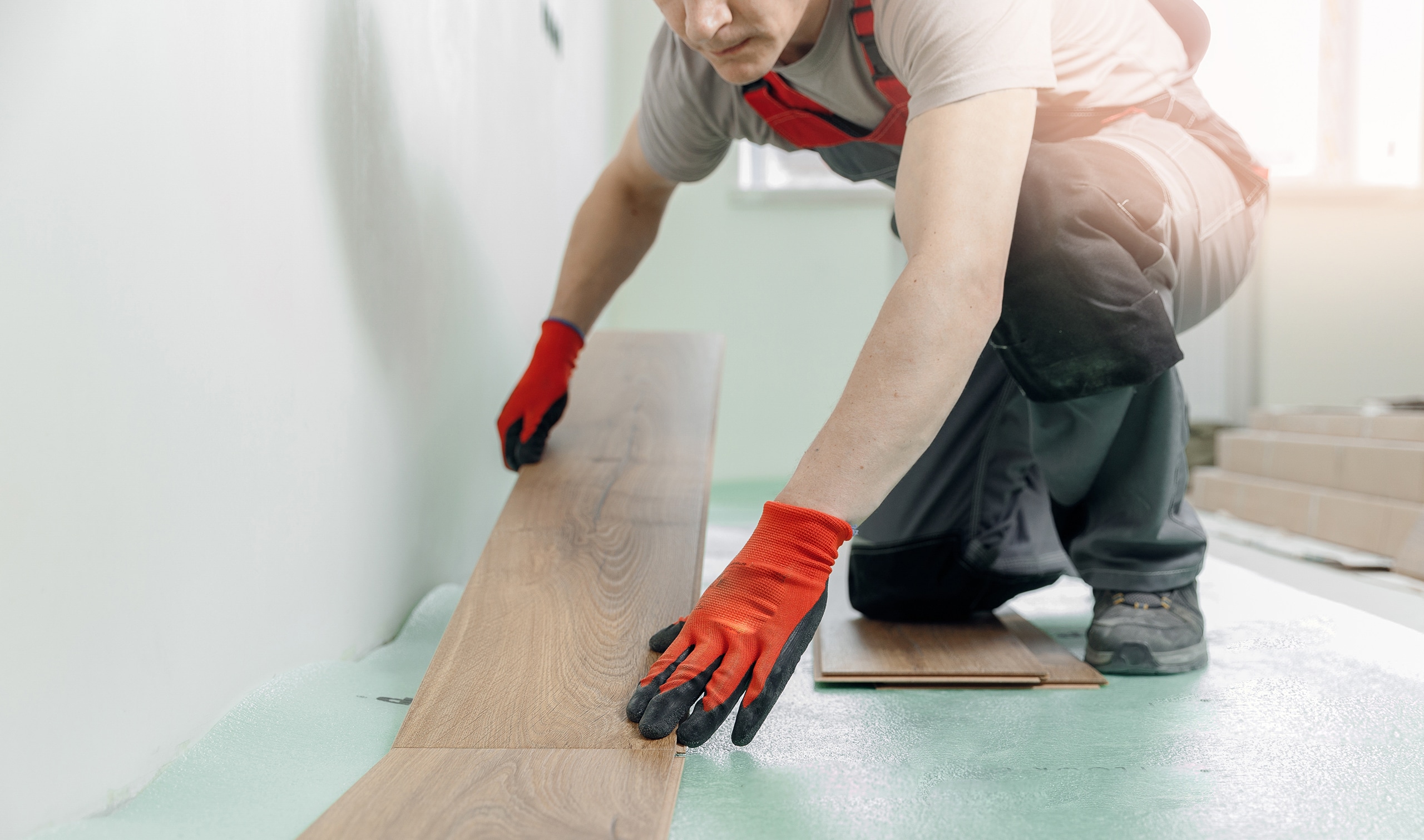
Floating installations mean that the planks join at their edges and sit on the subfloor's surface like the same surface. They move in a single unit, instead of being fixed in place. It's more convenient to set up, easier to remove and more resilient to the imperfections of subfloors than nail-down. Engineered hardwood is a popular choice for floating installation in Philadelphia as its layered construction handles the slight movement of floating better than solid wood.
5. Floating Floors Have a Distinct feeling underfoot
The same is true of showroom visits. aren't always able to convey. Floating hardwood provides a gentle touch when you walk on it. It's not too dramatic but noticeable when you compare it to nail-down floors that are locked in place to the floor. For most homeowners, it's a no-problem. However, for some, specifically those upgrading from old nail-down flooring, it requires adjustment. If this bothers you think about it, ask your flooring professional whether you could walk an unfinished floor prior to making the decision to buy.
6. Nail-Down is the most labor intensive Prices of the three
From an installation standpoint nail-down hardwood demands longer and requires more skill as evidenced by the labor rates you'll see from Philadelphia flooring contractors. The subfloor should be clean smooth, flat, and thick. The planks have to be acclimatized. The nailer demands careful technique in order to avoid splitting. Flooring installers who nail-down proficiently are earning their fee. If you find a cheap hardwood installation quote It's a good idea to inquire how they're planning to fasten it.
7. Glue-Down is a Material Cost, but it also reduces the need for some labor Variables
Adhesive isn't cheap and glue-down work requires the right adhesive that's appropriate for the hardwood and subfloor combination. In the end, glue-down construction over concrete slabs that have been prepared will go more quickly than nailing on subfloors that require urgent repair. Flooring contractors throughout Bucks County and Delaware County generally recommend glue-down on engineered wood in slab-on-grade houses particularly because it blends real wood appearance with practical installation benefits.
8. Moisture Testing must be done prior to Any Method is Picked
This step is often skipped on budget-friendly jobs, and results in problems within a year. Concrete slabs release moisture vapor which can cause glue-down adhesive to fail in floating floors and cause them to break. Wood subfloors found in older Philadelphia rowhomes could carry excessive moisture from crawlspaces or inadequate ventilation. A correct moisture reading prior installation isn't required -- it's how a competent flooring professional determines which approach is secure and what preparation works are needed prior to.
9. Refinishing compatibility varies by method
Solid hardwood that is nail-down can be sanded a few times in its lifewhich is among strong arguments to consider for it, despite the high installation costs. In general, engineered hardwood with glue down can be finished either once or twice dependent on the wear layer thickness. Floating engineered hardwood may be less refinishable. If long-term wood floor restoration is one of your goals then consider this into the plan of action prior to installation, not after.
10. The right method is A Site Decision, Not a Preference Decision
Homeowners often come to the flooring consultation with an thought about the kind of installation they'd like. The most experienced flooring installers in Philadelphia are able to gently redirect that discussion to consider what your home's needs are. The most skilled flooring installers aren't pushing a preferred method -they're actually analyzing the subfloor, your humidity levels at your floor, in addition to your species of wood, and recommending accordingly. That site-specific judgment is exactly what separates licensed professionals from someone who owns a nailer. View the top
luxury vinyl plank installation Philadelphia for site info including free flooring estimate Philadelphia, bathroom tile installation Philadelphia, hardwood floor refinishing Philadelphia, flooring estimate Philadelphia, free flooring estimate Philadelphia, LVP flooring installation Philadelphia, floating hardwood floor installation Philadelphia, LVP floor installation cost Philadelphia, luxury vinyl flooring Philadelphia, ceramic tile flooring Philadelphia and more.
Hardwood Refinishing Vs. Replacement: What Makes Sense?
The floors of hardwood in Philadelphia homes are a testament to the past in the form of original oak strip flooring in a Germantown twin large pine planks in the Chestnut Hill colonial home, or a decades-old hardwood flooring in an Delaware County ranch that's seen three families. When floors become scratchy, the thought is frequently for them to be replaced. But replacing isn't always the wise choice and refinishing isn't always the cheaper option although it may appear so on the surface. The choice between sanding and finishing the wood or taking it out and starting fresh will depend on factors that are apparent once someone who understands what they're looking at really examines the flooring. Learn how to think about it before committing to either path.
1. The thickness of the floor is the main Priority That Determines Your Choices
Solid wood is able to be sanded finished multiple times throughout its life -- but not infinitely. Each refinishing operation removes thin layer of wood and once the floor has been removed from the tongue-andgroove fastening device beneath the tongue, it's in no position to be sanded again without risk. The majority of solid timber is 3/4 inches in thickness with 1/4 inch of wood above the tongue that is available for sanding. A flooring professional can assess the remaining thickness by using an instrument placed in a hidden spot. The reading, in addition to other factors, will determine the extent to which refinishing is currently in the works.
2. Engineered Hardwood Includes a Narrower Refinishing Window
Engineered hardwood installation has expanded dramatically in Philadelphia, Bucks County, and Montgomery County homes over the over the past two decades. many homeowners don't know their flooring is engineered until the need to refinish is required. The actual wood veneer layer on engineered wood is thinner that solid -- it ranges from 1mm - 6mm depending upon the specific product which limits how many times that it is able to be processed. Thin-veneer engineered flooring may only allow one refinishing session, or none whatsoever. Being aware of what you've got before concluding that refinishing is possible saves your time from wasting a trip to estimate.
3. Refinishing Costs Significantly Less Than Replacement in most cases.
Floor sanding and refinishing in Philadelphia typically costs from $3 to $3 per square ft. A complete hardwood floor replacement- removal of existing flooring, subfloor assessment, new flooring, and installation -- will cost you between $10 and $20 per square foot or more based on the species and technique. In a 500 sq. ft. area, you'll pay the difference between an estimate of $1,500 to $3,000 and a $5,000-$10,000 one. If the floor you have is adequate thickness and is free of structural issues, then refinishing gives you the majority of the visual impact of new floors at just a fraction of the cost.
4. Surface Wear and tear is No Reason to Replace
Scratches, scuffs and dullness, minor staining, and surface-level discoloration are precisely what floor sanding and refinishing is made to tackle. The conditions appear worse and are more noticeable than they actually. A thorough sanding procedure removes any damaged surface layer and returns the floor to the unfinished wood at when custom staining and finishing restores the appearance. Philadelphia homeowners who are replacing floors with damaged surfaces that they would have been able to fix by choosing a high-cost option based more on style and design than real.
5. Structural Damage alters the calculation Incompletely
Warping, cups, major water damage that has penetrated below the surface, rot at the board base, as well as floors that have numerous missing or loose sections are all different from surface wear. Refinishing takes care of surface conditions- it cannot correct an area that has moved from a structural standpoint due to moisture nor can it fix flooring where the subfloor beneath has been damaged. If structural damage is apparent The honest opinion of an accredited flooring installer might be that replacement is the only way to get ensure that the floor performs right, not to mention look better temporarily.
6. Prior Refinishing History Influences the current decision
A hardwood floor which has been refinished three or four times throughout it's lifespan may have less material above the tongue regardless of how thick it started. Conversely, original hardwood in a Philadelphia home that has never been repaired -- which happens to be more frequent than most people think when looking at older properties may have considerable remaining thickness even if it looks rough. The appearance of the floor is not a reliable indicator of its potential for refinishing. Physical measurement and, in some instances taking a floor vent to look at a cross-section of the floor is how a professional can determine what's left.
7. Custom staining while refinishing can make a floor's character
Refinishing's unappreciated benefit is the chance to alter colour of the floor. Custom hardwood staining in Philadelphia can be a part of process of refinishing -- after the floor has been sanded to bare wood, a stain is applied prior to the finish coats are put down. People who live with orange-toned 1990s hardwood for years may be surprised by the discovery that those very same boards may change into a cool grey or a dark walnut or a warm natural, depending on the species chosen and the stain used. Removing the boards is not required to alter the appearance in a dramatic way.
8. Matching New Hardwood to floors that are already in place is Harder Than It Sound
One instance that could push homeowners toward full replacement is when only part of a floor is in need of attention, for example, a section damaged by water or add-on, or a room was carpeted previously. The installation of new hardwood that matches existing wood flooring in the rest of the house can be quite difficult. Wood species, cuts patterns, grain patterns and years of patina cannot be reproduced exactly when using new materials. Flooring contractors from Delaware County and South Jersey who are truthful about this will advise you that a complete Refinishing of the entire floor after patching typically the only way to achieve visually consistent.
9. Replacement Opens the Doors to Upgrading the Material Entirely
Sometimes, the only option is replacing the floor, not because refinishing is impossible but rather because the floor isn't worth preserving. Low-quality softwood that can scratch easily floorings with substantial subfloor issues that have to be dealt with without delay, or even homes where the layout has changed and the current floor isn't suitable anymore such are instances when replacement is a viable upgrade. Making the switch from worn softwood white oak hardwood or damaged real hardwood to engineered which is better suited for the home's environment, is a different approach than replacing a hardwood floor that you can refinish.
10. Do the assessment before you Decide, and Not after You've Select
Refinish option vs. replace decision must be taken after a professional has looked at the floor but not before. Most reputable flooring contractors in Philadelphia offer no-cost estimates including this type assessment: flooring thickness measurement, identifying of structural vs. surface issues, a moisture analysis along with a clear explanation of what each choice involves in terms as well as timeline and final results. Customers who ask for a quote on replacement have often already talked themselves into refinishing a flooring option that they've not yet fully explored. The assessment is absolutely free. The replacement, if it is found to be ineffective it isn't. View the best Read the recommended licensed flooring installers Philadelphia for website recommendations including hardwood flooring Montgomery County, hardwood floor installation South Jersey, flooring installation near me Philadelphia, hardwood floor installation South Jersey, flooring installation Montgomery County PA, flooring installers Philadelphia, flooring contractors Philadelphia PA, LVP flooring Philadelphia PA, ceramic tile flooring Philadelphia, hardwood floor refinishing cost Philadelphia and more.